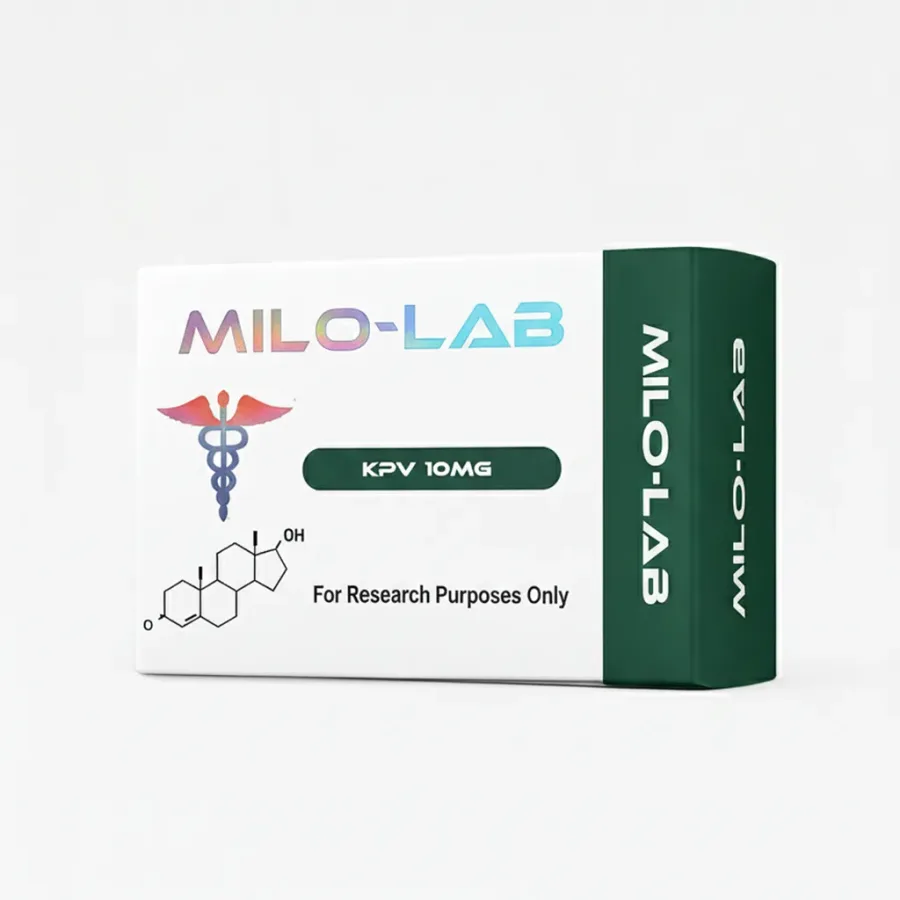
KPV
KPV (Lys-Pro-Val) is the anti-inflammatory C-terminal tripeptide of alpha-MSH, studied for gut, skin and immune-modulating research.
Total Price
฿1000
For research & laboratory use only. Not for human consumption.
Half-Life
~2-3 hours
Administration Route
Subcutaneous injection or oral (gut-targeted)
Anti-Inflammatory Tripeptide
Alpha-MSH C-terminal fragment blocks NF-κB signalling
IBD Research
Reduces mucosal inflammation in DSS-colitis models
Wound Healing
Promotes re-epithelialisation and reduces scar formation
Mechanism of Action
Scientific Research
Peptides (2006)
J Pharmacol Exp Ther (2009)
Exp Dermatol (2001)
Inflamm Bowel Dis (2012)
Why Researchers Choose KPV
KPV is the anti-inflammatory C-terminal tripeptide of alpha-MSH, valued in research because it concentrates most of the parent hormone’s NF-kB suppressing activity into a small, stable three-amino-acid molecule. The KPV 10mg vial is studied across three main areas:
Inflammatory Bowel Disease: Across murine colitis models, KPV lowers intestinal inflammation, helps preserve epithelial barrier integrity, and reduces disease activity scores. Oral, gut-targeted dosing tends to show the strongest signal for colonic disease.
Skin Inflammation and Wound Healing: KPV dampens keratinocyte inflammatory responses and has been investigated in psoriasis models, re-epithelialisation, and irritant contact dermatitis.
Neuroinflammation: Its blood-brain barrier penetration has opened research into central applications, including suppression of microglial activation.
Stacking Considerations
- With BPC-157: complementary gut coverage, where BPC-157 drives mucosal repair and angiogenesis while KPV suppresses the surrounding inflammatory environment
- With LL-37: antimicrobial action alongside KPV’s anti-inflammatory signal for infection-associated gut or skin models
- With VIP: both quieten NF-kB through distinct pathways, and VIP adds direct effects on gut motility and secretion
Reconstitution and Storage
Reconstitution: use bacteriostatic water; swirl gently until dissolved, do not shake. After reconstitution: keep refrigerated at 2-8°C, protect from light.
For research purposes only. Not for human consumption.
Dosing at a Glance
Route
Subcutaneous injection or oral (gut-targeted)
Frequency
1-2x daily
Typical research dose
0.5–2 mg
Opens the calculator with this peptide preselected. Research reference only.