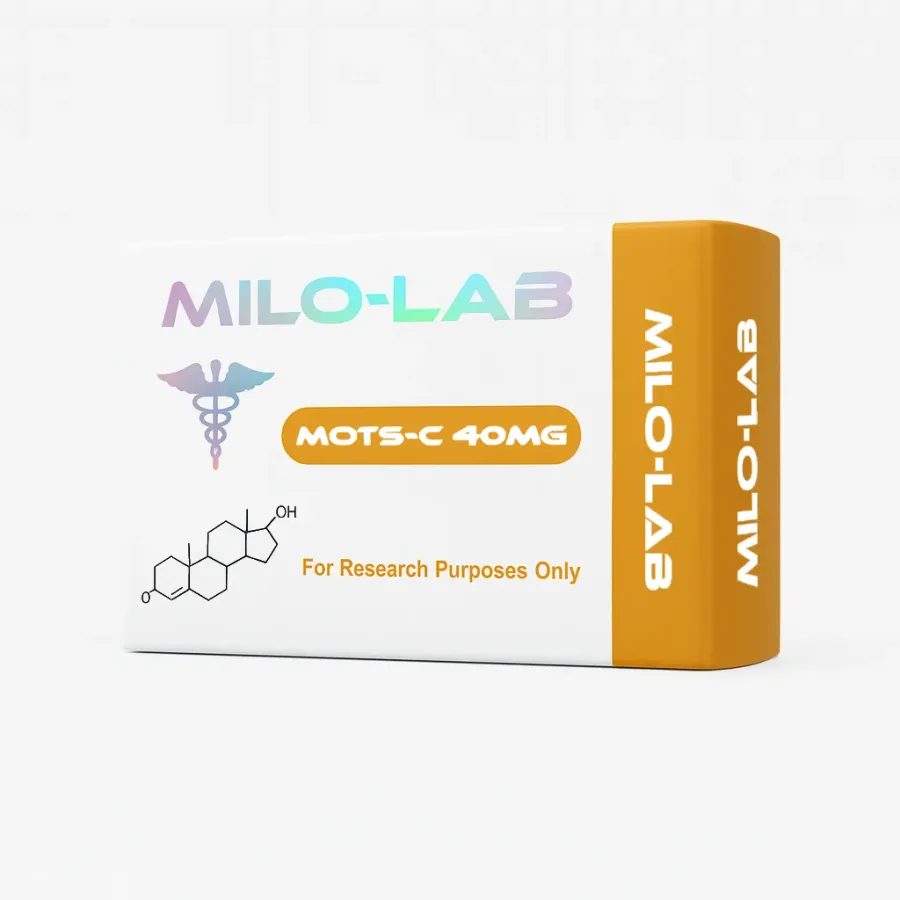
MOTS-c
MOTS-c is a mitochondrial-derived peptide encoded in mitochondrial DNA that activates AMPK and is studied as an exercise mimetic for metabolic regulation.
Total Price
฿3200
For research & laboratory use only. Not for human consumption.
Administration Route
Subcutaneous injection
Mitochondrial Hormone
Mitochondria-encoded peptide that regulates nuclear gene expression
Exercise Mimicry
Activates AMPK pathways similar to aerobic exercise
Insulin Sensitivity
Improves glucose uptake in skeletal muscle and liver
Mechanism of Action
Scientific Research
Cell Metabolism (2015)
Why Researchers Choose MOTS-c
MOTS-c is one of the first mitochondrial-derived peptides (MDPs) to be characterised, and it has become a reference tool wherever the link between mitochondrial signalling and whole-body metabolism is investigated. As an AMPK-activating exercise mimetic encoded inside mitochondrial DNA, it appears across several research lines:
- Mitochondrial retrograde signalling and AMPK pathway activation studies
- Insulin sensitivity, glucose uptake and metabolic homeostasis research
- Age-associated physical decline and skeletal-muscle function investigations
- Exercise-mimetic pharmacology, benchmarked against AICAR and other AMPK activators
- Folate-methionine cycle and one-carbon metabolism studies
- Mitochondria-derived peptide biology and cell-to-nucleus communication
Reconstitution and Storage
Reconstitution: use bacteriostatic water (1 to 2ml per 40mg vial); swirl gently until fully dissolved, do not shake. After reconstitution: keep refrigerated at 2-8°C, protect from direct light, and use within 28 days.
Dosing at a Glance
Route
Subcutaneous injection
Frequency
2-3x weekly
Typical research dose
5–10 mg
Opens the calculator with this peptide preselected. Research reference only.
Product FAQs
Stacks Well With
Related Products
SS-31
SS-31 (elamipretide) is a mitochondria-targeted tetrapeptide that binds cardiolipin to restore ATP output and reduce oxidative stress in aged cells.
NAD+
NAD+ (nicotinamide adenine dinucleotide) is the central redox coenzyme and sirtuin substrate used in cellular energy, DNA repair and anti-aging research.