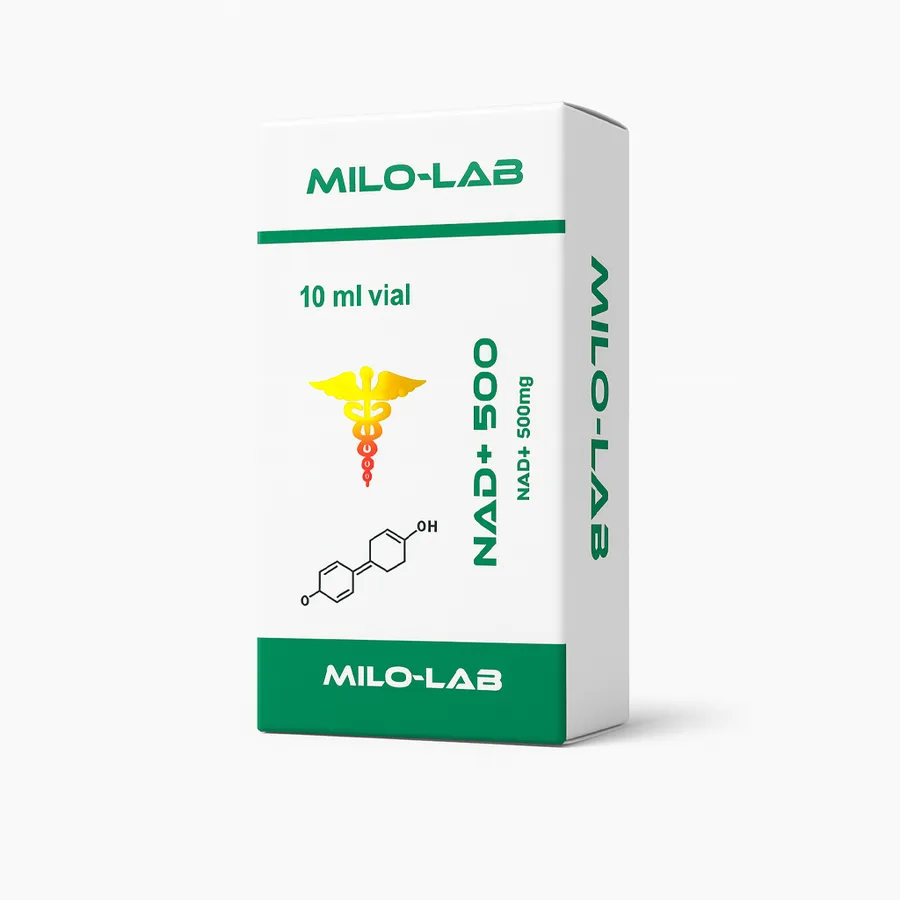
NAD+
NAD+ (nicotinamide adenine dinucleotide) is the central redox coenzyme and sirtuin substrate used in cellular energy, DNA repair and anti-aging research.
Total Price
฿2400
For research & laboratory use only. Not for human consumption.
Half-Life
Short (intracellular conversion from NMN/NR precursors)
Administration Route
IV infusion or subcutaneous injection
Sirtuin Activation
Fuels SIRT1/3/5 for epigenetic repair and metabolic health
Hallmark of Aging
NAD+ declines 50% between age 40-60; restoration is anti-aging
PARP DNA Repair
Essential cofactor for poly(ADP-ribose) polymerase DNA repair
Effect Timeline
Energy levels increase; mental clarity improves
Physical endurance increases; muscle recovery faster
Sirtuin activation markers up; oxidative stress decreasing
Sustained energy; DNA repair pathway activity elevated
Start — Week 1
Energy levels increase; mental clarity improves
Week 2
Physical endurance increases; muscle recovery faster
Week 4
Sirtuin activation markers up; oxidative stress decreasing
Week 8
Sustained energy; DNA repair pathway activity elevated
Mechanism of Action
Scientific Research
Nature Reviews Molecular Cell Biology (2021)
Cell Metabolism (2015)
Why Researchers Choose NAD+
NAD+ (nicotinamide adenine dinucleotide) is the coenzyme that sits at the centre of cellular energy and repair, and injectable NAD+ is the form most used in research that needs reliable systemic exposure. Because tissue NAD+ levels fall sharply with age, it is studied wherever mitochondrial function, DNA repair and the biology of ageing intersect:
- Sirtuin activation and epigenetic regulation studies
- Mitochondrial biogenesis and function research
- DNA damage repair capacity assessment
- Metabolic flexibility and substrate oxidation studies
- Neurological function and neuroprotection in ageing models
- Inflammatory pathway modulation (NF-kB, CD38 activity)
How NAD+ Works
NAD+ cycles between its oxidised (NAD+) and reduced (NADH) forms to shuttle electrons through the mitochondrial electron transport chain, the process that ultimately generates ATP. Beyond energy metabolism, the same molecule is the obligatory substrate for two families of repair enzymes: sirtuins (SIRT1, SIRT3, SIRT6), which govern epigenetic regulation, mitochondrial oxidative defence and telomere maintenance, and PARP enzymes, which carry out poly(ADP-ribose) DNA repair. Because both enzyme classes consume NAD+, the cellular NAD+/NADH ratio acts as a real-time sensor of energy and stress state, and restoring NAD+ is studied as a way to keep these pathways active in ageing models.
Storage and Reconstitution
Reconstitution: use sterile water for injection or normal saline immediately before use; for IV further dilute in 100-250ml normal saline, for subcutaneous use 1-2ml bacteriostatic water. Protect from light. After reconstitution: keep refrigerated and use within 24 hours for IV, within 7 days for subcutaneous.
Dosing at a Glance
Route
IV infusion or subcutaneous injection
Frequency
Once daily
Typical research dose
250–500 mg
Opens the calculator with this peptide preselected. Research reference only.
Product FAQs
Stacks Well With
Epitalon
Epitalon (epithalon) is a synthetic Ala-Glu-Asp-Gly tetrapeptide studied for telomerase activation, pineal regulation and longevity research.
GHK-Cu
GHK-Cu (glycyl-L-histidyl-L-lysine) is a naturally occurring copper-binding tripeptide that drives collagen synthesis, skin repair and wound healing.
Related Products
Epitalon
Epitalon (epithalon) is a synthetic Ala-Glu-Asp-Gly tetrapeptide studied for telomerase activation, pineal regulation and longevity research.
SS-31
SS-31 (elamipretide) is a mitochondria-targeted tetrapeptide that binds cardiolipin to restore ATP output and reduce oxidative stress in aged cells.
MOTS-c
MOTS-c is a mitochondrial-derived peptide encoded in mitochondrial DNA that activates AMPK and is studied as an exercise mimetic for metabolic regulation.
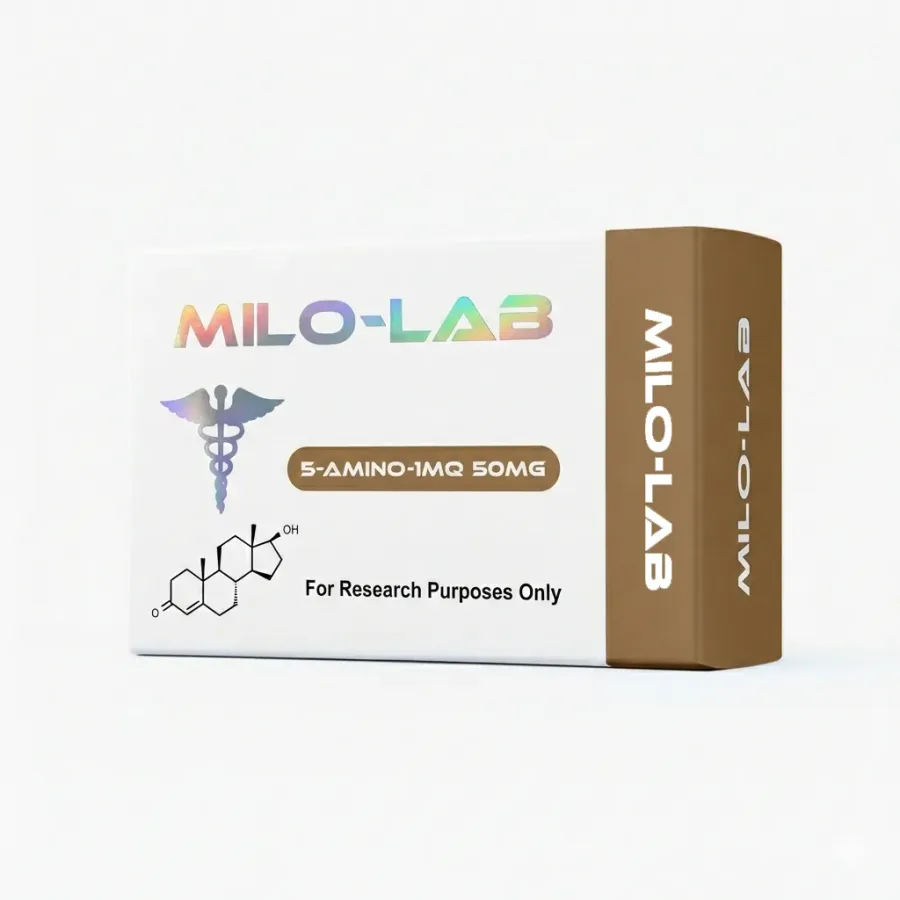
5-Amino-1MQ
5-Amino-1MQ is a small-molecule NNMT inhibitor that raises NAD+ and SAM to support fat-cell metabolism, insulin sensitivity and healthy aging research.