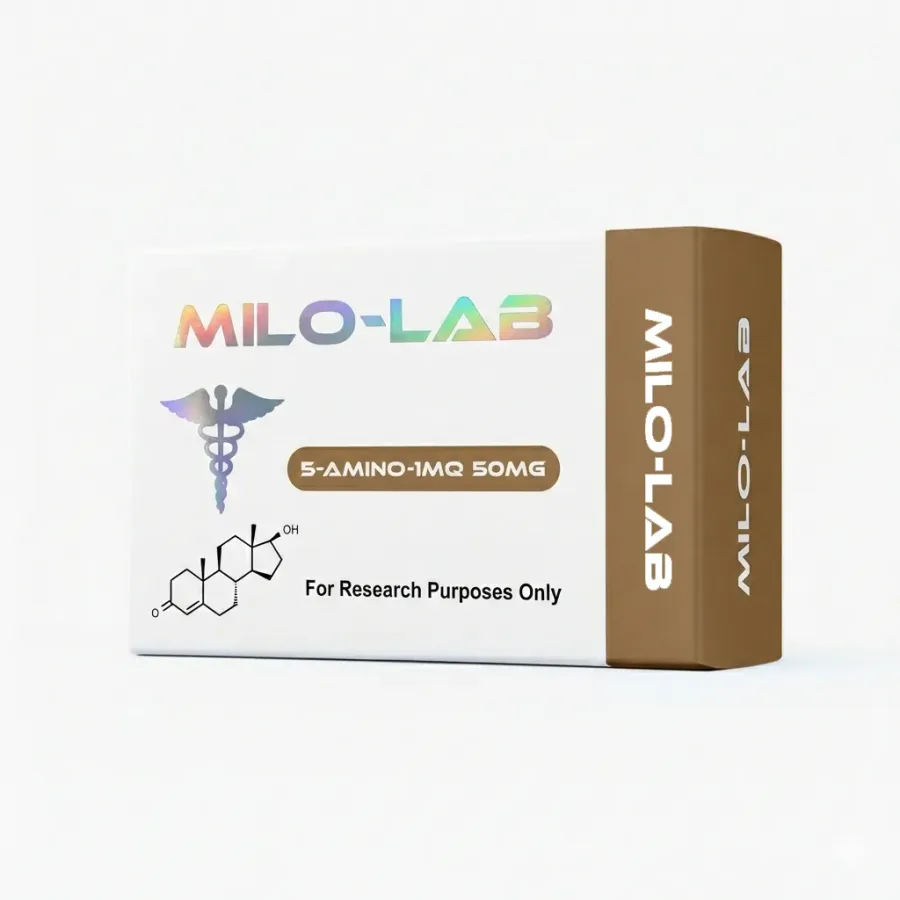
5-Amino-1MQ
5-Amino-1MQ is a small-molecule NNMT inhibitor that raises NAD+ and SAM to support fat-cell metabolism, insulin sensitivity and healthy aging research.
Total Price
฿1700
For research & laboratory use only. Not for human consumption.
Administration Route
Subcutaneous injection
NNMT Enzyme Inhibitor
Blocks fat cell programming enzyme to reverse obesity
Adipocyte Reprogramming
Converts white fat to metabolically active brown fat
NAD+ Pathway
Raises NAD+ by inhibiting methylation consumption
Mechanism of Action
Scientific Research
Why Researchers Choose 5-Amino-1MQ
5-Amino-1MQ is one of the few small-molecule NNMT inhibitors available for research, and it raises NAD+ by blocking consumption rather than by feeding a precursor. That distinct mechanism makes it useful across several lines of metabolic and longevity work:
- NNMT enzyme biology and downstream metabolic pathway studies
- NAD+ elevation mechanisms independent of NMN/NR precursor supplementation
- S-adenosylmethionine (SAM) availability and methylation-cycle research
- Adipocyte metabolism, fat-cell differentiation and lipid accumulation studies
- Insulin sensitivity and glucose metabolism research
- Comparative NNMT inhibition vs. NMN/NR booster protocols
Reconstitution and Storage
Reconstitution: use bacteriostatic water, or a 5 to 10% DMSO-in-water mix where greater solubility is needed. Swirl gently until dissolved, do not shake. After reconstitution: keep refrigerated and use within 14 days.
Dosing at a Glance
Route
Subcutaneous injection
Frequency
Once daily
Typical research dose
5–50 mg
Opens the calculator with this peptide preselected. Research reference only.
Product FAQs
Stacks Well With
Related Products
NAD+
NAD+ (nicotinamide adenine dinucleotide) is the central redox coenzyme and sirtuin substrate used in cellular energy, DNA repair and anti-aging research.
Epitalon
Epitalon (epithalon) is a synthetic Ala-Glu-Asp-Gly tetrapeptide studied for telomerase activation, pineal regulation and longevity research.
MOTS-c
MOTS-c is a mitochondrial-derived peptide encoded in mitochondrial DNA that activates AMPK and is studied as an exercise mimetic for metabolic regulation.