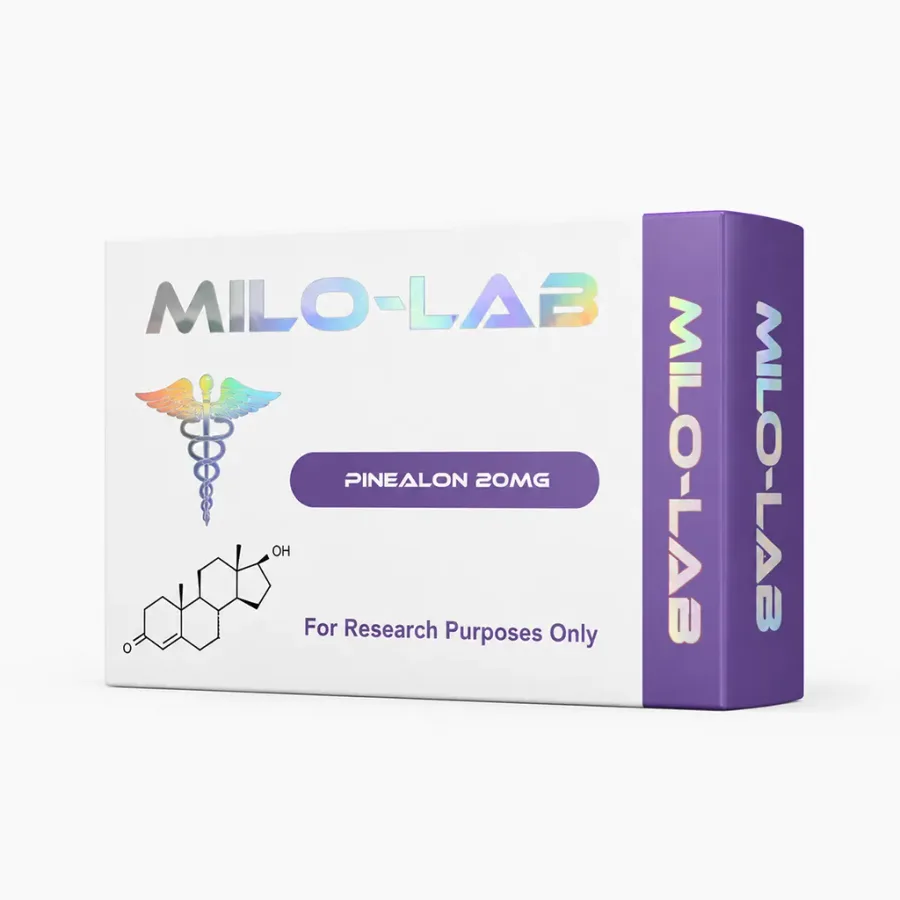
Pinealon
Pinealon (Glu-Asp-Arg, EDR) is a Khavinson short-peptide bioregulator studied for neuroprotection, melatonin support and reduced neuronal oxidative stress.
Total Price
฿1700
For research & laboratory use only. Not for human consumption.
Half-Life
~1-2 hours
Administration Route
Subcutaneous injection or oral
Pineal Gland Peptide
Khavinson tripeptide targeting pineal gland gene expression
Melatonin Restoration
Supports age-related decline in pineal melatonin production
Neuroprotection
Reduces neuronal oxidative stress and supports glial health
Mechanism of Action
Scientific Research
Ann N Y Acad Sci (2004)
Bull Exp Biol Med (2007)
Neuro Endocrinol Lett (2007)
Mechanism: Nuclear Penetration and Gene Activation
Pinealon’s proposed mechanism involves:
- Cellular uptake via endocytosis or direct membrane penetration (small peptides can enter cells through transporter proteins)
- Nuclear localisation - EDR interacts with histone-associated chromatin
- Binding to promoter regions of pineal-specific genes
- Transcriptional activation of:
- AANAT (arylalkylamine N-acetyltransferase, rate-limiting for melatonin synthesis)
- Nrf2-regulated antioxidant genes (HO-1, SOD, catalase)
- Survival genes in neurons (Bcl-2 family)
Evidence for this mechanism comes from both cell culture studies and animal models showing Pinealon-induced increases in antioxidant enzyme expression and reductions in lipofuscin accumulation.
Lipofuscin and Neuronal Aging
Lipofuscin is a fluorescent waste material that accumulates in post-mitotic cells (neurons, cardiomyocytes) as a result of incomplete lysosomal degradation of oxidised proteins. Its accumulation is a hallmark of cellular aging and is associated with reduced neuronal function. Pinealon has been shown in multiple studies to reduce lipofuscin content in brain tissue of aged animals - suggesting it either reduces oxidative damage that generates lipofuscin or enhances lysosomal/proteasomal clearance.
Combination with Epithalon
The Khavinson group has studied combinations of their peptide bioregulators extensively:
- Epithalon (AEDG): thymus-derived, systemic telomerase activation and immune modulation
- Pinealon (EDR): pineal-derived, brain and melatonin axis support
Together they are reported to produce additive anti-aging effects in both animal models and long-term human observational studies.
Reconstitution and Storage
Reconstitution: reconstitute the vial with bacteriostatic water; swirl gently until dissolved, do not shake. After reconstitution: keep refrigerated, protect from direct light, and use within 28 days.
For research purposes only. Not for human consumption.
Dosing at a Glance
Route
Subcutaneous injection or oral
Frequency
Once daily
Typical research dose
200–400 mcg
Opens the calculator with this peptide preselected. Research reference only.
Product FAQs
Stacks Well With
Related Products
Epitalon
Epitalon (epithalon) is a synthetic Ala-Glu-Asp-Gly tetrapeptide studied for telomerase activation, pineal regulation and longevity research.
DSIP
DSIP (Delta Sleep-Inducing Peptide) is an endogenous nonapeptide that promotes deep delta-wave (slow-wave) sleep and buffers stress-driven cortisol.