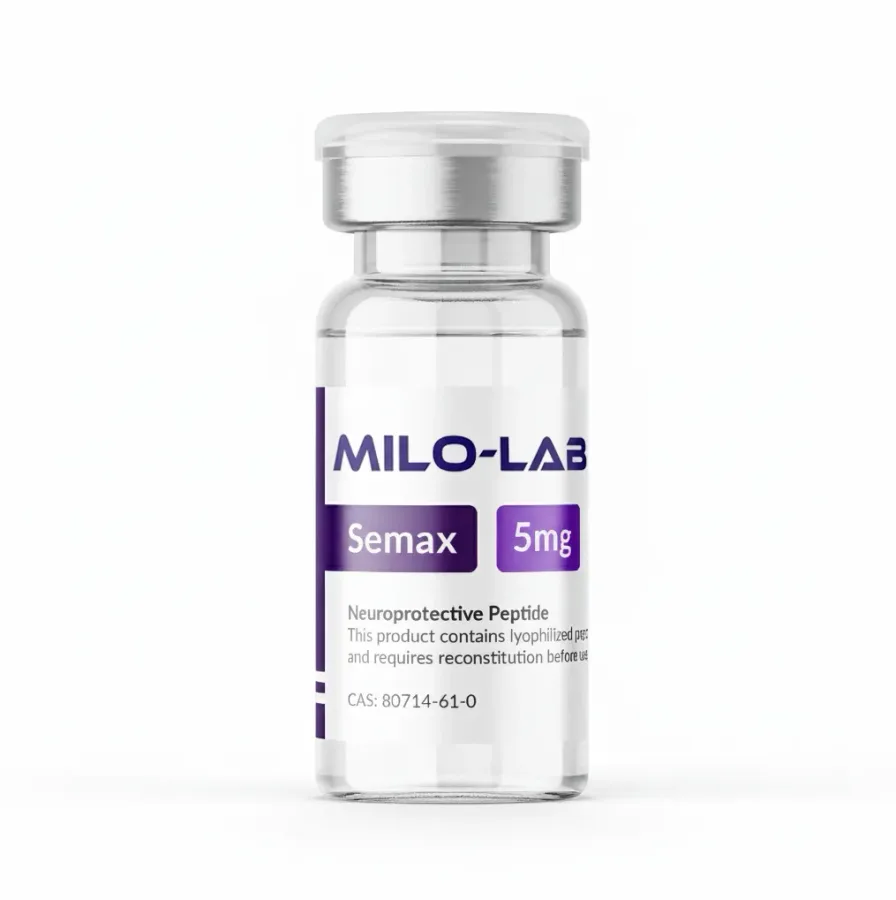
Semax
Semax is a synthetic ACTH(4-7) heptapeptide nootropic that upregulates BDNF and NGF for cognitive enhancement and neuroprotection.
Total Price
฿700
For research & laboratory use only. Not for human consumption.
Half-Life
~1-7 minutes (intranasal); active metabolites much longer
Administration Route
Intranasal or subcutaneous injection
ACTH Analogue Nootropic
Melanocortin receptor activation enhances focus and cognition
Neuroprotection
Reduces ischaemia damage; used in Russian stroke protocols
BDNF & NGF Release
Triggers neurotrophic factor release for synaptogenesis
Effect Timeline
Increased focus and mental clarity within first uses
Working memory improvement; verbal fluency enhanced
BDNF elevation measurable; stress resilience improved
Sustained neuroprotective effect; cognitive baseline elevated
Start — Days 1–3
Increased focus and mental clarity within first uses
Week 2
Working memory improvement; verbal fluency enhanced
Week 4
BDNF elevation measurable; stress resilience improved
Week 8
Sustained neuroprotective effect; cognitive baseline elevated
Mechanism of Action
Scientific Research
Bull Exp Biol Med (2006)
Zh Nevrol Psikhiatr Im S S Korsakova (2001)
Zh Nevrol Psikhiatr Im S S Korsakova (2004)
Why Researchers Choose Semax
Semax is one of the most studied nootropic peptides to come out of Russian neuropharmacology, valued wherever BDNF-driven cognitive enhancement and neuroprotection are the research goal. The Semax 5mg vial, sold singly or in 25mg and 50mg kits, is the standard format for the protocols below.
- Cognitive enhancement and working-memory research
- Neuroprotection and acute ischaemic-stroke recovery models
- BDNF and NGF neurotrophic-signalling studies
- Dopaminergic and serotonergic pathway investigations
- Angiogenesis and neuronal survival in hypoxic tissue
- Stress-resilience and attention-deficit research
Mechanism: Neurotrophic Factor Cascade
BDNF and NGF upregulation: Semax raises both the mRNA and the protein levels of BDNF (brain-derived neurotrophic factor) and NGF (nerve growth factor) across the hippocampus, frontal cortex, and striatum. This neurotrophic support is the central driver behind both the acute cognitive lift and the longer-term neuroprotective effect.
Dopamine and serotonin modulation: Semax activates dopaminergic neurons in the mesocortical and nigrostriatal pathways and strengthens serotonergic transmission. Both systems feed executive function, motivation, and mood.
VEGF upregulation: Under ischaemic stress, Semax increases vascular endothelial growth factor (VEGF) in neurons and astrocytes, which promotes angiogenesis and helps neurons survive in oxygen-starved regions.
Oxidative stress reduction: Semax curbs superoxide dismutase (SOD) consumption and lowers lipid-peroxidation markers after experimental ischaemia.
Stroke Recovery Research
Russian clinical trials reported meaningful gains in neurological outcomes when Semax was given within 12 hours of an acute ischaemic stroke:
- Quicker recovery of motor function
- Lower neurological deficit scores
- Better cognitive performance at three-month follow-up
- Stronger outcomes at equivalent doses when delivered nasally rather than parenterally
Standard Semax vs N-Acetyl Semax Amidate
| Form | Modifications | Relative Potency | Stability |
|---|---|---|---|
| Standard Semax | None | Baseline | Moderate |
| N-Acetyl Semax | N-terminal acetyl | Moderate increase | Higher |
| N-Acetyl Semax Amidate | Acetyl + C-terminal amide | Significant increase | Highest |
The acetyl and amidate modifications improve lipophilicity (better CNS penetration) and harden the peptide against enzymatic degradation, which is why the modified forms are reported as more potent per dose.
Reconstitution and Storage
Reconstitution: use sterile or bacteriostatic water; swirl gently until dissolved, do not shake. After reconstitution: keep refrigerated and use within 30 days.
For research purposes only. Not for human consumption.
Dosing at a Glance
Route
Intranasal or subcutaneous injection
Frequency
1-3x daily (intranasal/SC)
Typical research dose
300–900 mcg
Opens the calculator with this peptide preselected. Research reference only.
Product FAQs
Stacks Well With
Selank
Selank is a synthetic tuftsin-analogue heptapeptide developed in Russia, studied as a non-sedating anxiolytic and nootropic that raises BDNF.
DSIP
DSIP (Delta Sleep-Inducing Peptide) is an endogenous nonapeptide that promotes deep delta-wave (slow-wave) sleep and buffers stress-driven cortisol.
NAD+
NAD+ (nicotinamide adenine dinucleotide) is the central redox coenzyme and sirtuin substrate used in cellular energy, DNA repair and anti-aging research.
Used in Research Stacks
Cognitive Focus Stack
Related Products
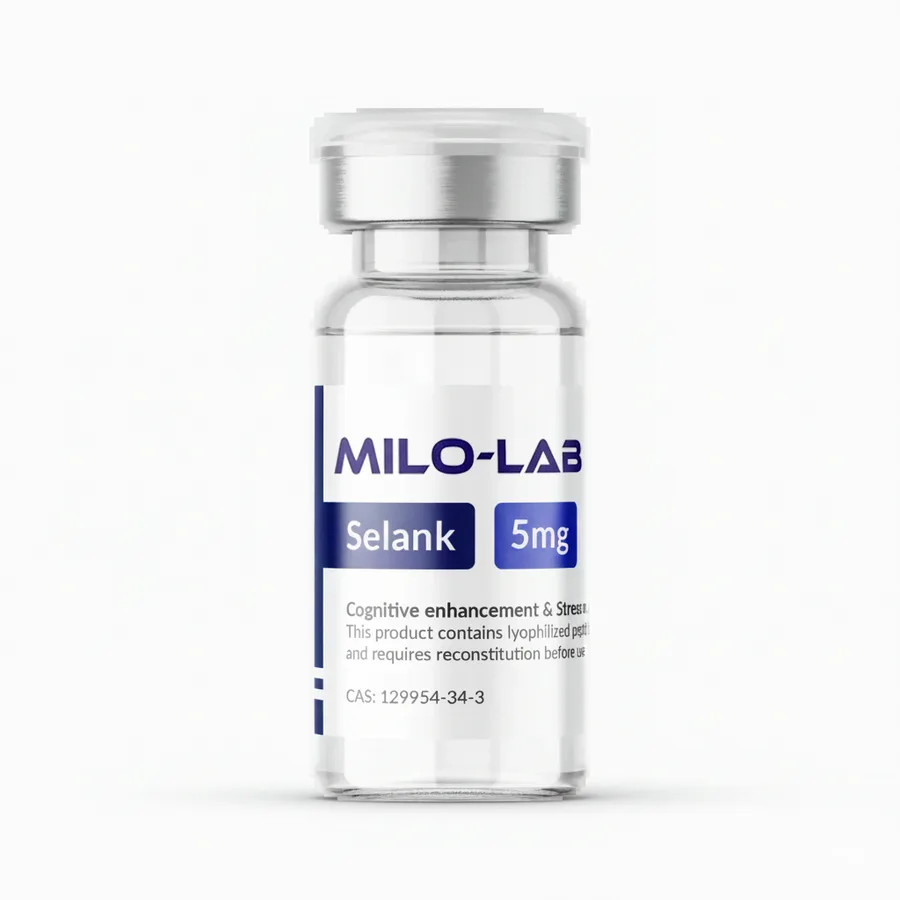
Selank
Selank is a synthetic tuftsin-analogue heptapeptide developed in Russia, studied as a non-sedating anxiolytic and nootropic that raises BDNF.
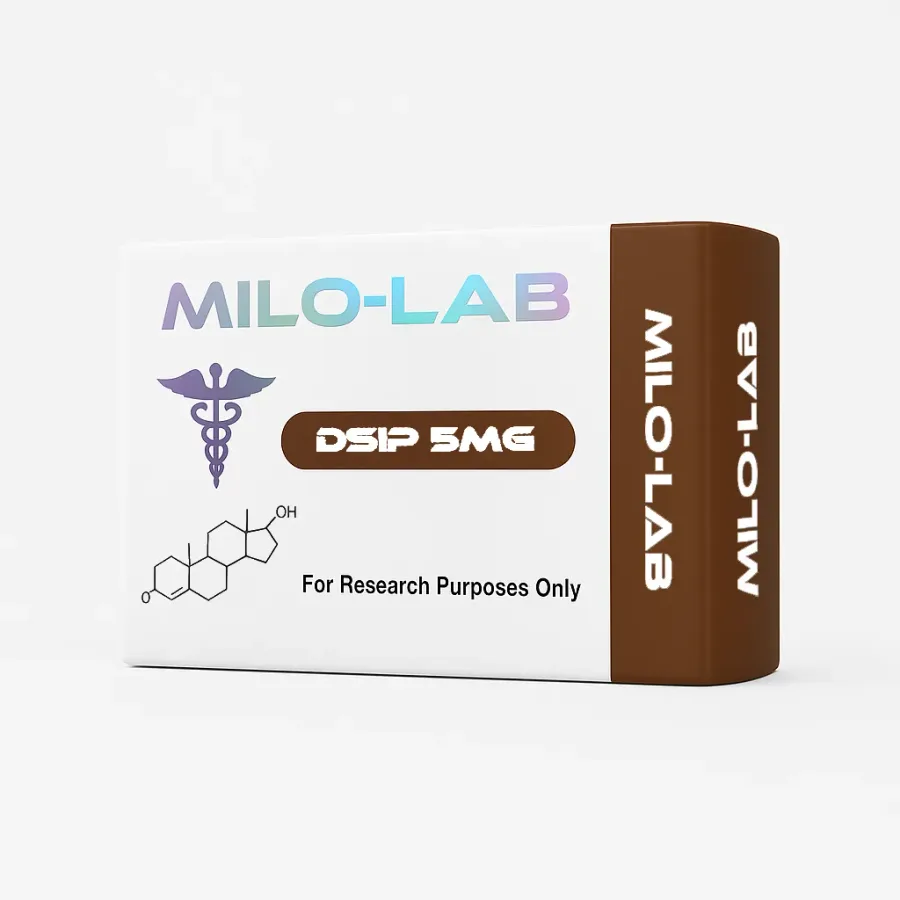
DSIP
DSIP (Delta Sleep-Inducing Peptide) is an endogenous nonapeptide that promotes deep delta-wave (slow-wave) sleep and buffers stress-driven cortisol.
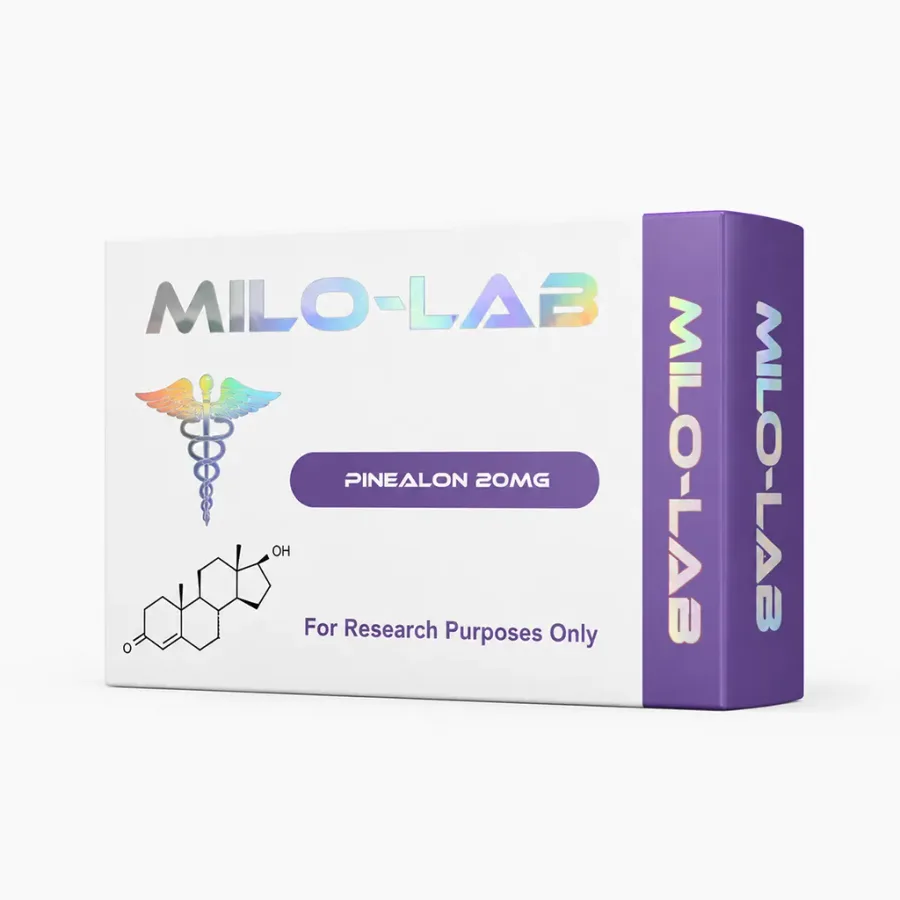
Pinealon
Pinealon (Glu-Asp-Arg, EDR) is a Khavinson short-peptide bioregulator studied for neuroprotection, melatonin support and reduced neuronal oxidative stress.